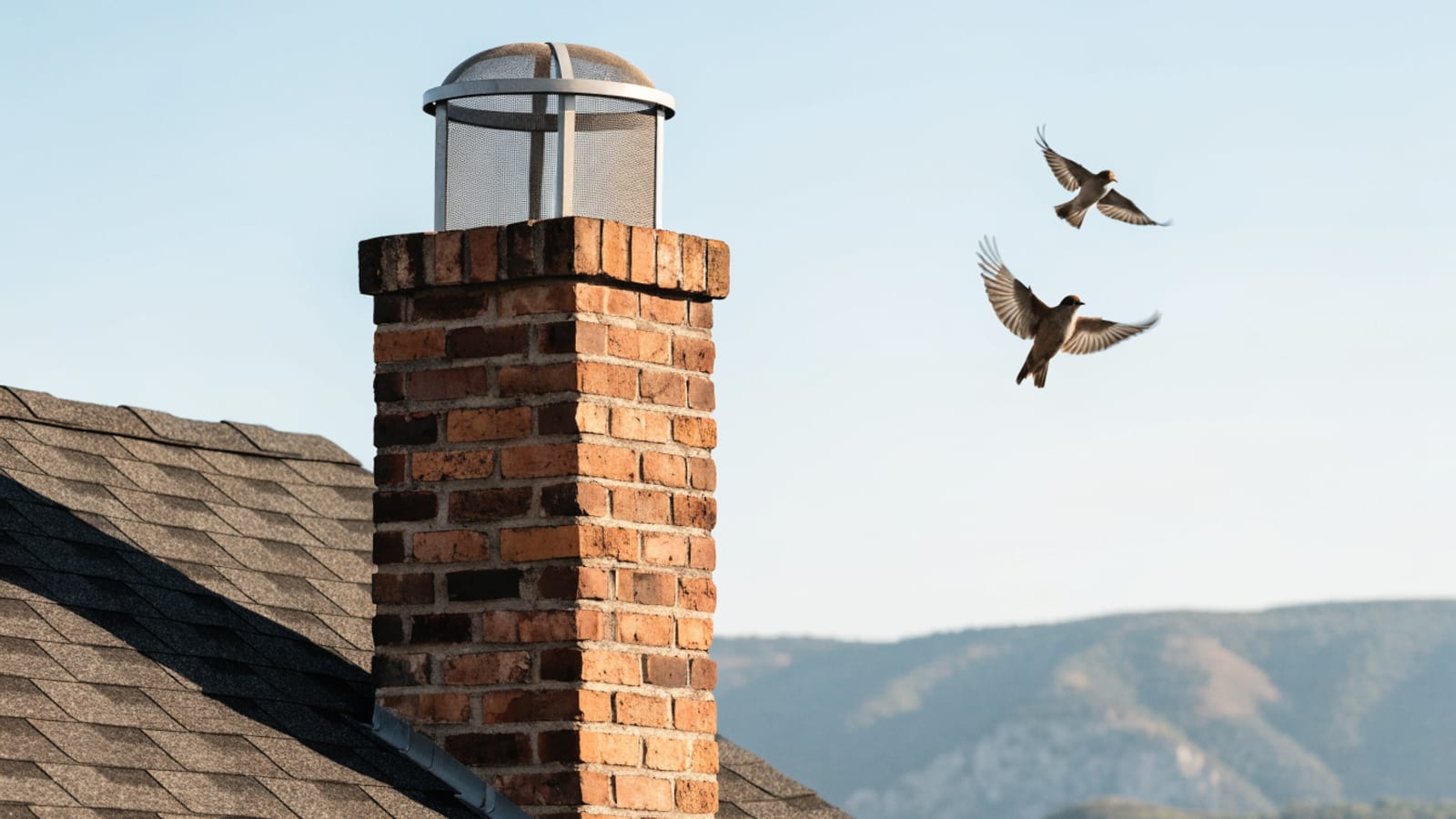
To Boulder wildlife, a chimney is prime real estate: elevated, sheltered, warm in the shoulder seasons and unlocked. Raccoons den in smoke shelves, squirrels fall in and cannot climb the slick tile back out, and birds nest on the first ledge they find. We get them out gently, lawfully and completely, and then we make sure the vacancy never gets relisted.
Who moves in, and how we move them out
Raccoons, usually a mother with kits in spring, are encouraged out humanely and on their own feet, with timing chosen so no kits are left behind. Squirrels and the occasional confused bird get a ladder out or a careful hand. The method depends on the tenant, but the rules are constant: no smoke, no poisons, no starting a fire under a living thing, and no sealing the flue until we have confirmed it is empty. Most evictions are same-week, and stuck-animal calls jump the queue.
The chimney swift exception
One Boulder tenant is legally untouchable: the chimney swift, a small migratory bird that nests inside flues and is protected under federal migratory bird law, nest and all. If swifts have taken the summer lease, the lawful course is to wait out the nesting season, keep the damper closed, and screen the flue after they migrate in early fall. We identify them honestly and will not remove an active protected nest, and any operator who offers to should worry you.
After the eviction, the screening
Removal without exclusion is a subscription service, and not one worth buying. Once the flue is confirmed empty we sweep out nesting debris, which is tinder-dry and sits exactly where sparks go, scan the flue for damage from claws and nesting, and fit a stainless cap with mesh sized to keep wildlife out without choking draft. Done in that order, the problem stays solved, which is the only version of solved we sell.
Animals in the chimney FAQ
There is scratching in my chimney. What do I do right now?
Keep the damper closed, do not light a fire, and call. Scratching usually means a trapped squirrel or an active raccoon den, and both are straightforward for us and miserable for the animal the longer they wait.
Will the animals come back after removal?
To the neighborhood, yes; to your flue, not through a properly fitted cap. Exclusion is the permanent half of the job, which is why we treat the screening as part of the service rather than an upsell.
What does an old nest in the flue actually risk?
Blockage and fuel. A nest chokes draft, which can push combustion gases into the house, and dry nest material sits in the spark path. Even a long-abandoned nest is worth a sweep before the burning season.