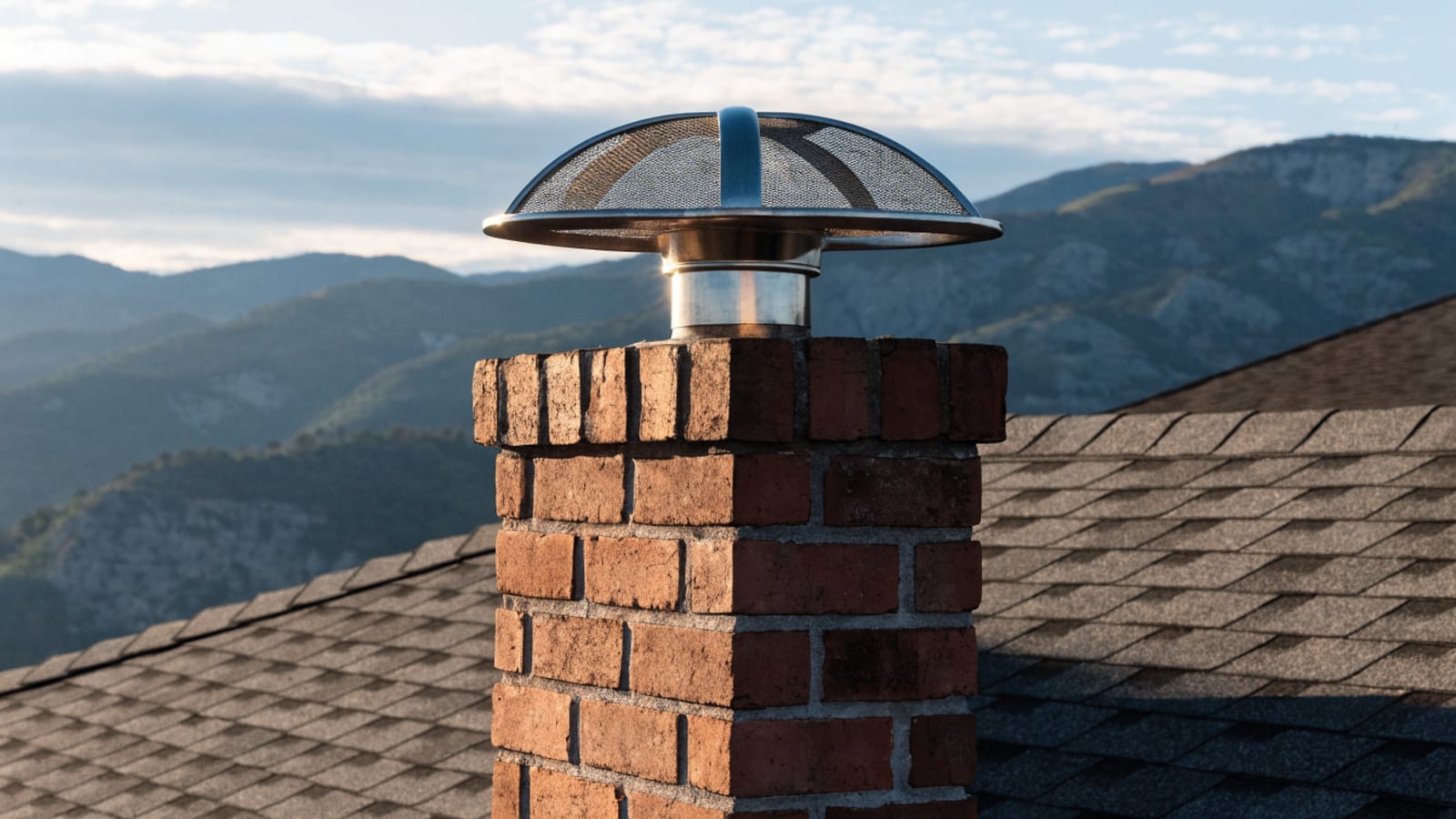
The cap is the cheapest part of a chimney and the one doing the most thankless work: keeping rain and snowmelt out of the flue, keeping sparks in, keeping wildlife from treating your chimney as a furnished apartment, and doing all of it while the wind coming off the Flatirons tries to remove it from the building. An underbuilt cap is usually the first thing a Chinook takes. We install ones it cannot.
What a good cap does all day
Water is the quiet one. An uncapped flue swallows every storm and sends the water down through tile joints and smoke shelf, feeding the freeze-thaw cycle that ruins masonry from the inside. Then there is the mesh: a proper spark arrestor keeps embers off the roof, which in a county with Boulder's fire memory is not a detail, and the same mesh keeps out raccoons, squirrels and nesting birds. Finally the cap shapes airflow at the termination, and a wrong cap on a windy ridge can turn gusts into downdraft. One part, four jobs.
Built for wind that has a name
When the local wind events are famous enough to be named, cap selection stops being an afterthought. We favor heavy-gauge stainless, mechanically fastened rather than relying on friction and optimism, with geometry suited to how your chimney sits relative to the ridge and the weather side. On exposed sites, above Eldorado Springs, out on the mesas, up the canyons, we will say plainly when a standard cap is not the right call and what is.
Repair, or replace
A bent cage or a loose base can often be repaired on the spot for less than the conversation about it. Rusted-through hoods, undersized builder-grade caps and anything that has already flown once get replaced; a cap that failed in wind has told you its opinion of the site. Either way you get a written price first, and the old cap leaves with us.
Chimney cap FAQ
Do I actually need a chimney cap?
An open flue is a rain gauge, an ember exit and a wildlife entrance all at once. Along with sweeping, a decent cap is the best small money a chimney owner spends in this climate.
Why does my fireplace smoke when the wind blows?
Wind moving over the termination can pressurize the flue top and shove air backwards, especially with the west winds this county produces. The right cap geometry often settles it; when it does not, the cause is usually termination height or house air balance, both of which we can diagnose.
What is a spark arrestor, and is it required?
It is the mesh screen around the cap that stops embers from reaching the roof. Codes commonly require them on wood-burning flues, and in Boulder County the fire logic needs no explaining. Every cap we fit includes one.