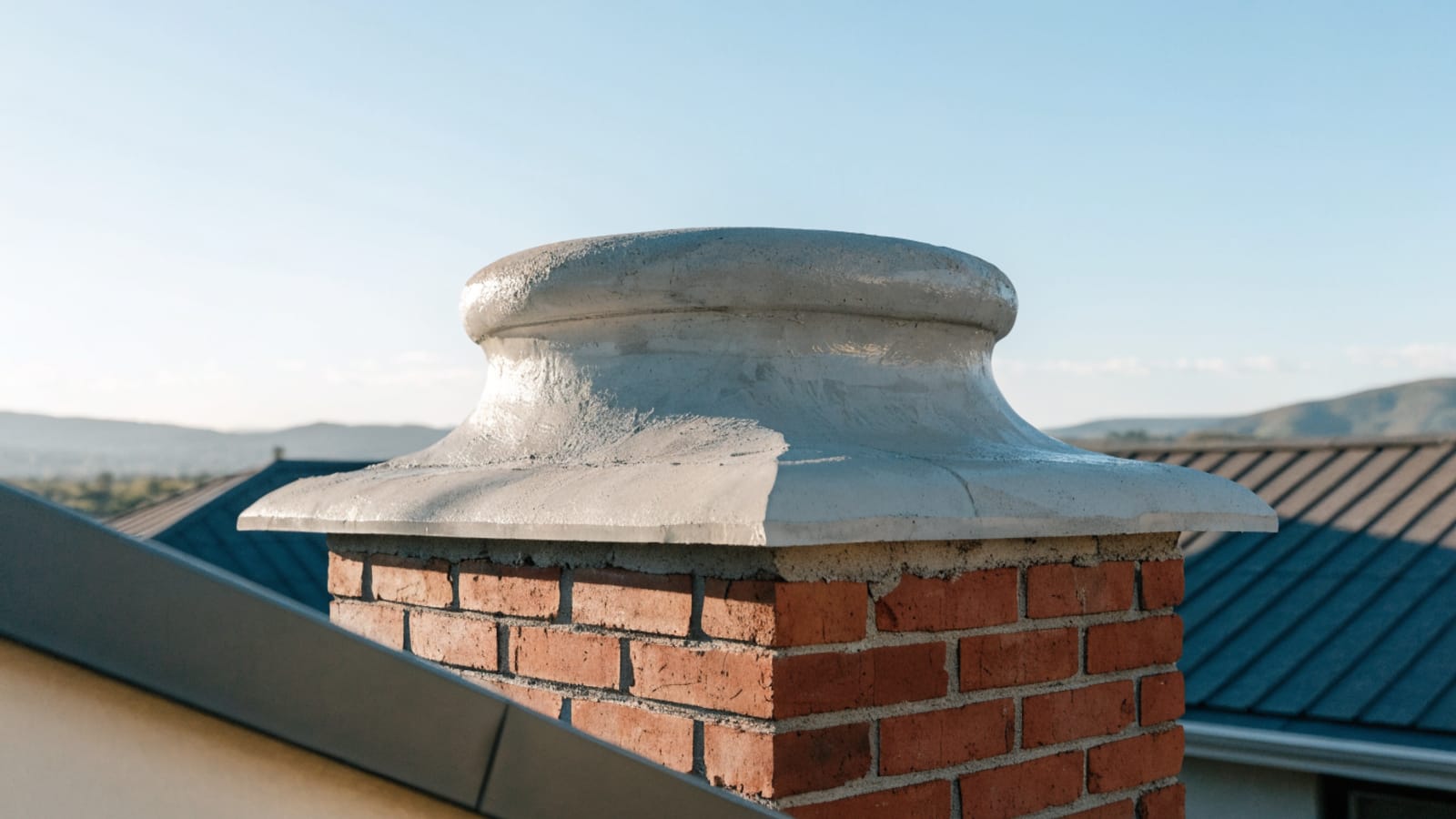
The crown is the concrete shoulder at the very top of a masonry chimney, and its whole job is to shed water away from the brick below. When it does that job, nobody thinks about it for thirty years. When it cracks, every storm and every snowmelt afternoon sends water straight into the top course of masonry, and the countdown on the whole upper stack begins. Most of the serious masonry damage we meet in Boulder started at a crown someone could not see.
How crowns fail here
Many were poured badly to begin with: too thin, no overhang, brick mortar instead of real concrete, cast tight against the flue tile with no gap for the tile to expand. Add the Front Range routine, baking sun at altitude, then a hard freeze the same night, hundreds of cycles a winter, and hairline cracks arrive on schedule. Water enters, freezes, pries. The crown spalls, then the top courses loosen, then the repair quote grows a comma. The early fix is genuinely cheap; the late one involves scaffolding.
Repair, seal or rebuild
Hairline cracking in an otherwise sound crown takes a flexible crown sealant that moves with the temperature swings instead of fighting them. Wider cracks and chipped edges call for patching and resurfacing. A crown that was built wrong or has failed structurally gets formed and poured again the way it should have been: proper concrete, a drip overhang past the brick, an expansion gap at the flue, and a bond break so tile and crown can move independently. We photograph everything up there, because you should not have to take a roof story on faith.
The summit check, while we are up
A crown visit is the natural moment to look at everything else that lives at the top: cap, flashing, the last few brick courses, the mesh. It costs nothing extra for us to look and report, and the top of the chimney is where Boulder weather does its loudest work. Think of it as a summit inspection with photographs instead of a summit register.
Chimney crown FAQ
What is the difference between a chimney crown and a chimney cap?
The crown is the poured concrete surface sealing the top of the masonry; the cap is the metal hat over the flue opening. They fail differently and are fixed differently, and a full chimney needs both healthy.
How do I know if my crown is cracked?
From the ground, you mostly do not, which is the problem. Stains on the upper brick, dampness in the firebox after storms and spalled faces near the top are the indirect clues. Our free inspection settles it with photos.
How long does a crown repair last?
A flexible sealant on early cracking is commonly good for a decade or more; a properly formed and poured rebuild should outlast every roof shingle around it. The wrong fix, brushed-on paint over structural cracks, lasts about two winters here.