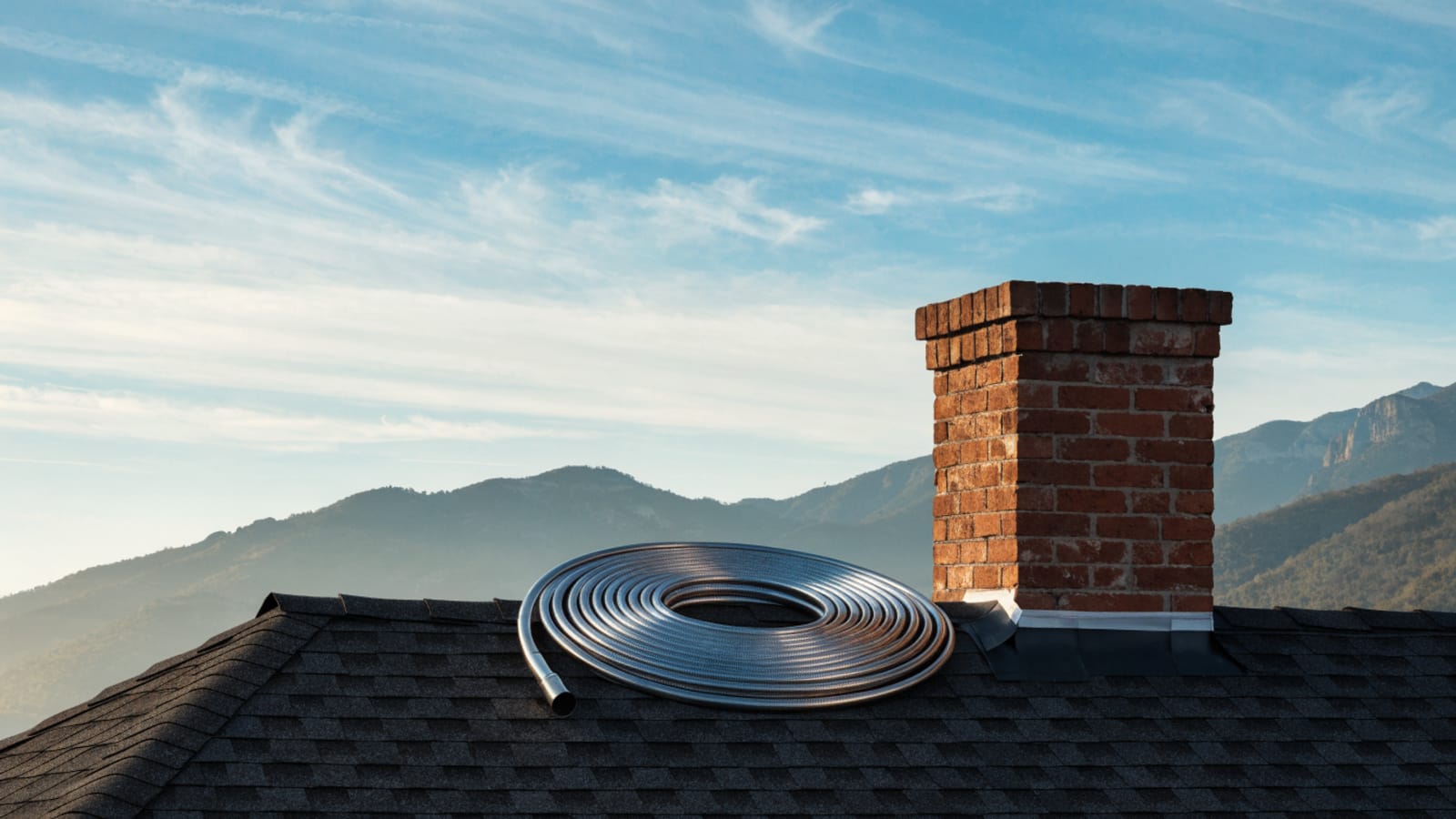
The liner is the part of the chimney you never see and the part doing most of the work: containing combustion gases, protecting the masonry from acids and heat, and giving smoke a smooth, correctly sized path out of the house. When tiles crack or joints open, or when a home near downtown predates liners entirely, relining is how a chimney gets its margin of safety back without rebuilding the stack.
When a flue needs a liner
The camera makes the case for us. Cracked or shifted clay tiles, missing mortar between tile joints, an unlined flue in an older home, a liner scarred by a past chimney fire, or a new appliance whose flue size requirements no longer match the old clay: each of these is a relining conversation. Gas appliances deserve a mention of their own, because their cooler, wetter exhaust condenses in oversized old flues and quietly eats mortar from the inside. If you have converted a Boulder fireplace to gas and never touched the flue, that is worth a look.
Sizing for a mile of elevation
A liner is a draft calculation wearing a steel jacket. Draft depends on the density difference between flue gases and outside air, and at 5,430 feet both are thinner, so the sizing math that works at sea level can leave a flue lazy here. We size liners for the air Boulder actually has, insulate them so the flue warms quickly and drafts early in the burn, and verify the result on camera and with a draft check rather than assuming the chart was right.
What relining involves
Most jobs take a day: the old flue is cleaned and scanned, the stainless liner is fitted and insulated, connections at the appliance and the termination are made properly, and a new cap goes on top. Stainless systems carry listings to the relevant UL standard and, installed correctly, tend to outlast the roof above them. You get the before and after footage, because a liner you cannot see deserves proof you can.
Chimney liner FAQ
How do I know if my chimney is unlined?
Many Boulder homes built before the midcentury are, especially in the older blocks near Mapleton Hill and University Hill. Ten minutes with our camera answers it definitively, and the look is free.
Stainless steel or cast-in-place?
For most Boulder homes stainless wins on cost, serviceability and proof: you can scope it, sweep it and replace it. We will say so when a flue genuinely calls for something else.
Will a new liner improve my draft?
If the old flue was oversized, leaking or rough, usually yes, and noticeably. A correctly sized, insulated liner warms faster and pulls harder, which at this elevation is the difference a smoky fireplace has been waiting for.