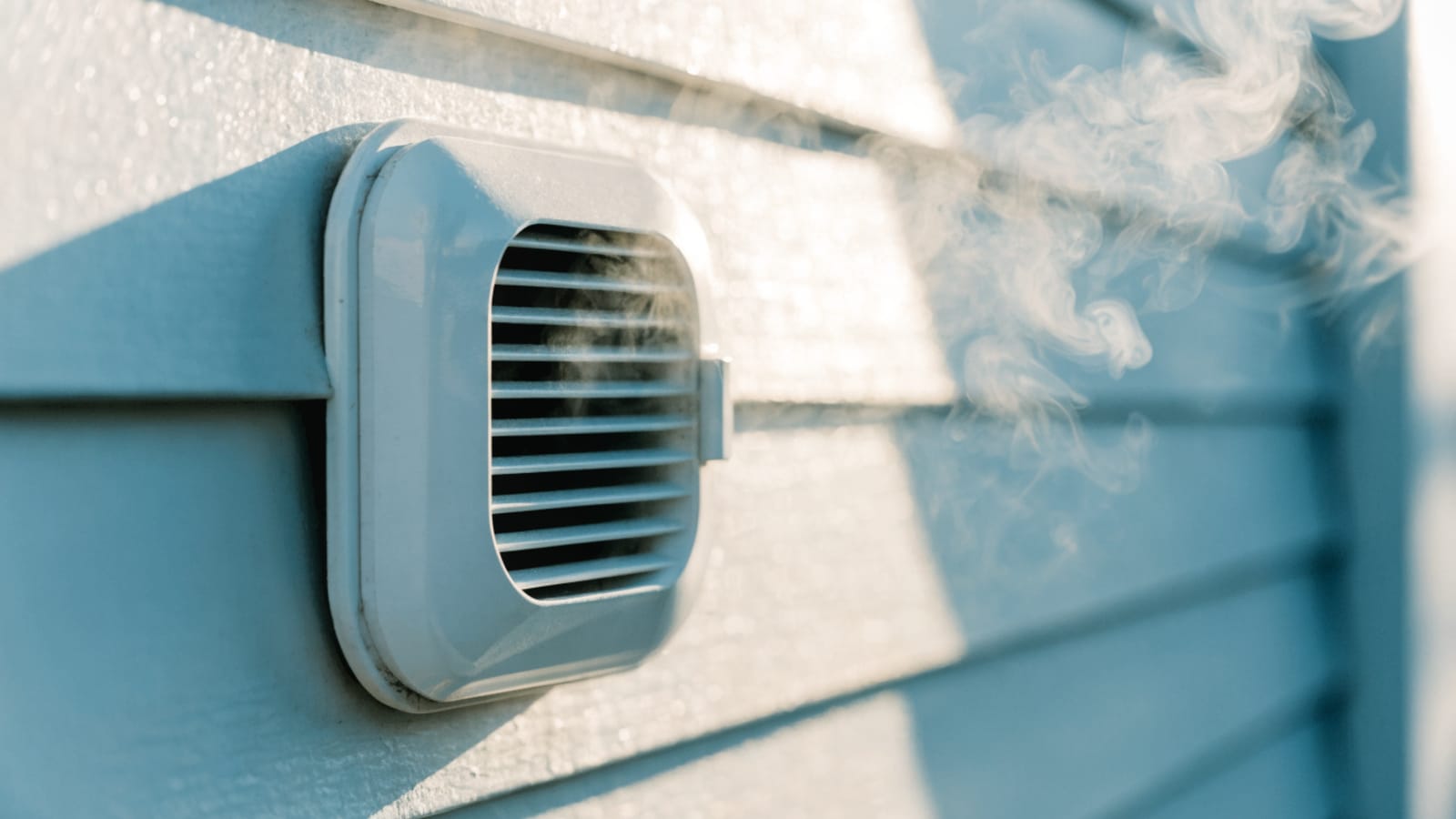
The dryer vent is the chimney nobody thinks about: a duct carrying hot, moist, lint-laden air out of the house, slowly upholstering itself in the most flammable material a home produces. A packed vent shows up first as annoyance, towels taking two cycles, a dryer hot to the touch, and eventually as the leading cause of dryer fires. Clearing it is unglamorous work that we do thoroughly, because the physics of it is the same as our chimney work: a blocked flue is a hazard, whatever the appliance.
What the service covers
The full run, not the first reachable stretch: from the drum connection behind the dryer, through every elbow and vertical, to the exterior termination, cleared with rotary brushes and vacuum extraction so the lint leaves the house instead of relocating inside the duct. We check the termination flap, which loves to jam open with lint and become a winter door for cold air and curious birds, and we verify airflow afterward so you know the run is actually clear rather than just quieter.
Boulder wrinkles
Long duct runs in bigger county homes, roof terminations that nobody has looked at since construction, and birds, who find a warm, lint-lined duct exactly as attractive as a chimney. A nest in a dryer vent blocks airflow completely and is disturbingly common in spring. The same screening logic we apply to chimneys applies here, with the caveat that dryer terminations must use flap-style covers, not fine mesh, which lint clogs.
When to have it done
The honest signals: drying times creeping up, the laundry room warmer or more humid than it should be, a burnt-lint smell during cycles, visible lint at the outside flap, or a dryer that shuts itself off on thermal protest. Absent symptoms, an annual clear for heavy-use households and every couple of years for lighter ones keeps the risk retired. If we arrive and the run turns out clean, we say so and charge you for the truth, which is cheap.
Dryer vent FAQ
How do I know my dryer vent is clogged and not the dryer failing?
Rule of thumb: if clothes need a second cycle but the dryer sounds normal, suspect the vent first. Airflow at the exterior flap during a run tells the story; weak or absent flow means the duct, not the appliance.
Can I clean the vent myself with a brush kit?
The first few feet, sure. The elbows, verticals and long horizontal runs where lint actually packs are what the kits do not reach, and a partial clean can wedge a blockage tighter. By all means keep the lint screen religious; leave the full run to rotary equipment.
Does a clean vent really lower the fire risk?
Yes, materially. Lint ignites easily and the duct feeds it preheated air. National fire data has ranked failure to clean as the leading factor in dryer fires for years, which is why we treat this as safety work, not housekeeping.